01 / Patrol
Mobile patrol
Marked cars checking your property at unpredictable times overnight.
View details
Guide
The difference comes down to whether your property needs someone there, or someone checking.
Request a quoteCall (650) 376-8218
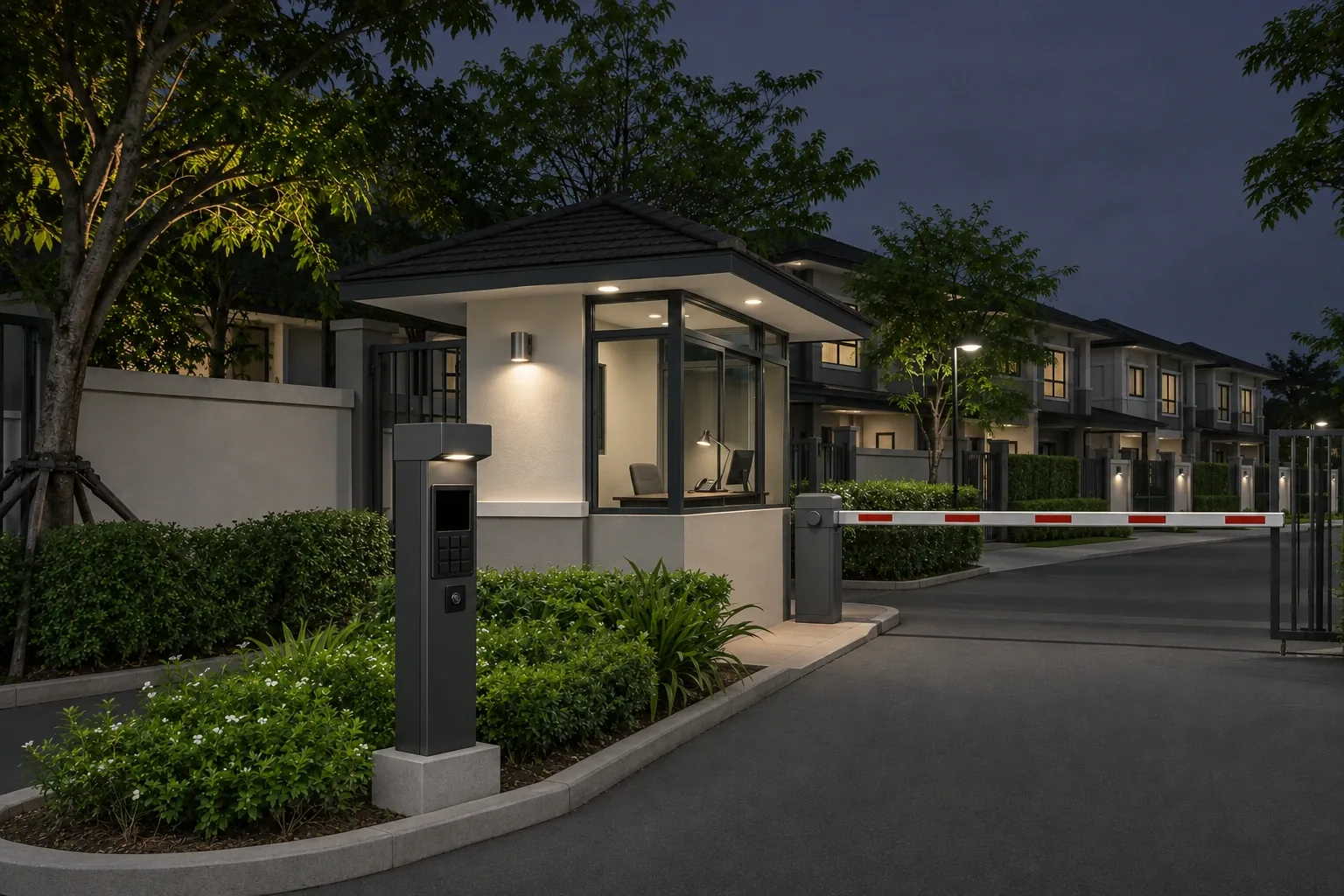
An on-site guard is part of the property for the whole shift: greeting, checking in, walking rounds and responding to what happens. Mobile patrol is a series of visits, with a marked car arriving at unpredictable times to check doors, gates and grounds before moving on.
One provides presence. The other provides regular, visible checks at a lower cost. The right choice depends on how the property is used after dark.
Hotels, residential lobbies and buildings with late tenants have people coming and going all night. Someone needs to be there to see who’s arriving, help guests and handle a problem as it develops. Patrol can’t do that from the road.
An on-site guard also makes sense after an incident, or when valuables are on the premises. Continuous presence is the strongest deterrent available.
Office buildings near the bayfront, shops on Broadway after closing and many smaller residential buildings are essentially empty overnight. There’s no one to check in, so a full shift is hard to justify.
Patrol suits properties like these. Officers in marked vehicles vary their arrival times, check entrances and grounds and log each stop with the time. A starting schedule is set at the walkthrough and adjusted once you’ve seen a few weeks of reports.
A property can use both: an officer in the lobby until late evening, then patrol overnight, or a guard at one building with a patrol stop at a sister property nearby.
Live camera monitoring can fill the gaps. Cameras are watched through the night, and patrol is dispatched when something appears.
Ask yourself whether anyone is on the property at night, whether something has already happened and how much ground there is to cover. Bring those answers to a free walkthrough and we’ll lay out both approaches in a written quote. Contracts run month to month, so you can change course.
Patrol is the efficient choice when the property’s risk is mostly about doors, gates and grounds rather than people. A Bayshore Highway office park that empties at six, a Broadway storefront after closing and a small apartment building with a locked lobby all fall into this group.
The key question is whether a visit every so often catches what matters. If the concern is a propped door, a broken window or someone camping in the lot, randomized visits from a marked car find those things and record them. If the concern is who walks in at two in the morning, you need a person there.
The reports differ too. An on-site guard files a daily shift report covering the whole shift: arrivals, rounds, conversations and anything handled along the way. Patrol produces a timed log for every visit, listing what was checked at each stop and when the officer arrived and left.
Both approaches send incident reports with photos by email when something happens. When comparing the two, picture which report answers your real question. A hotel general manager wants the overnight story; an office owner mostly wants proof the building was checked and secure.
Picture a bayfront hotel with arrivals past midnight: an on-site officer is the obvious fit, with patrol checking the garage. Now picture a two-story office near the airport that locks at seven: patrol visits and live camera monitoring cover it without a full shift.
Construction sites move between the two as the project progresses, with patrol while the site is mostly dirt and fencing and an overnight guard once valuable materials arrive. See mobile patrol and on-site security officers for how each service runs day to day.
Generally, yes, since you’re paying for visits rather than a full shift.
Yes. A posted officer can join the plan whenever the reports show one is needed.
Randomized timing keeps anyone watching the property from learning a pattern, while the timed log still shows you exactly when each visit happened.
Live monitoring covers a lot of ground between visits, and it works best paired with patrol so that something seen on screen brings a person to the property.
Resources
Industries
Services
01 / Patrol
Marked cars checking your property at unpredictable times overnight.
View details02 / On-site
Officers who greet, check in and keep watch while your own staff get on with their day.
View details