
Industries
Car dealership security in Burlingame
Security for Burlingame dealerships that run loaner fleets and busy service drives: loaners and keys accounted for at close, customer cars looked after overnight, the lot patrolled at unpredictable times and reports that list VINs and camera times.
Request a quoteCall (650) 376-8218
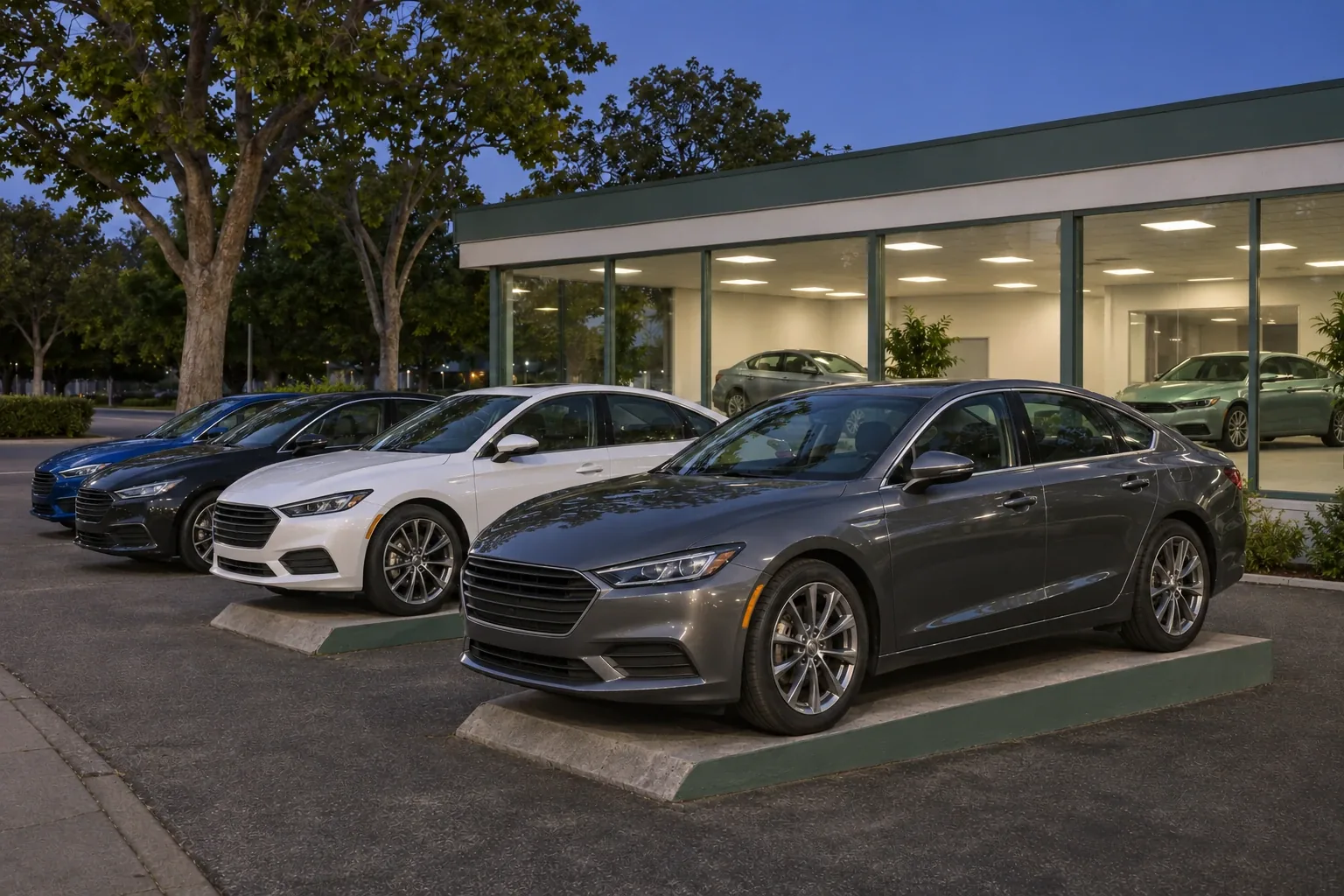
Loaner fleets, service drives and the overnight lot
Dealership security in Burlingame comes down to three jobs: knowing where every loaner and every key is at closing, keeping the service drive orderly while customer cars come and go, and watching the lot once the showroom goes dark. A posted officer, a patrol route or both can cover them, and the post orders spell out exactly how.
A loaner fleet adds moving parts: loaners leave in the morning and come back at all hours, service customers drop keys before the drive opens, and new stock arrives on carriers. Each handoff is a chance for a car or a key to go astray unnoticed.
We plan coverage around those handoffs after a free walkthrough with your general manager or service director. A posted officer can hold the service drive and the lot through the evening, and mobile patrol visits at randomized times can take the overnight hours.
Vehicle theft on the Peninsula in 2025
In CHP’s 2025 California Vehicle Theft Facts, San Mateo County recorded 1,196 stolen vehicles in 2025, down from 1,822 in 2024. Across California the report shows 133,372 thefts in 2025, a 24.3 percent drop from 176,230 the year before.
| Figure from CHP’s 2025 report | Value |
|---|---|
| San Mateo County vehicle thefts, 2025 | 1,196 |
| San Mateo County vehicle thefts, 2024 | 1,822 |
| California vehicle thefts, 2025 | 133,372 |
| Bay Area share of California’s 2025 thefts | 22.7 percent |
| Personal trucks and SUVs, share of 2025 thefts | 43.2 percent |
Personal trucks and SUVs were the largest group stolen statewide in 2025. CHP says 84.0 percent of stolen vehicles were recovered, but 6.6 percent of those had been stripped of minor parts and 3.8 percent were missing major components, so a car that comes back is not always whole.
CHP’s CAL-HEAT program runs a toll-free hotline for reporting vehicle theft; the hotline and the yearly data are on CHP’s auto theft page. Source for the figures: CHP, 2025 California Vehicle Theft Facts.
Loaner cars and keys, counted every night
Most loaner problems start as paperwork problems: a car out longer than planned, a key left in a cup holder, a return parked in the wrong row. The officer works through a closing count with your closing manager: loaners on the lot against loaners signed out, keys in the cabinet against the sign-out log, and any car or key that doesn’t match written up before the store locks.
A locked key cabinet or an electronic key system, a sign-out log and an end-of-day key count are the basics, and the officer’s part is to see that the count happens and that the key room is locked afterward.
The service drive, from the morning rush to after-hours drop-off
The service drive is the front door for service customers, and it should feel like one: an officer who directs drivers and keeps the lane moving while advisors write up repair orders, and who keeps customers out of the shop and the parts room when every bay is full.
After hours, the drive changes character. Customers leave cars and keys in the night drop, and those cars sit outside until the shop opens. Overnight patrol checks the drop-off area and the key box, notes each customer car by plate or VIN and photographs anything that looks wrong, so your service director starts the morning knowing what arrived and in what condition.
Test drives during showroom hours
Test drives belong to your sales process, and the checks work best when your staff run them: a copy of the driver’s license, a salesperson in the passenger seat and a log of the plate or stock number. An officer at the lot exit adds a second record of which car left, at what time and when it came back, and calls the sales desk when a car stays out well past the planned route.
Overnight rounds for trucks, SUVs and their parts
After close, patrol officers drive and walk the lot in marked vehicles at different times each night, checking the trucks and SUVs on the back rows, the gates, the fence line and the lighting. They look for the signs of converter cutting and wheel or tire theft: a vehicle up on a jack, tools left on the pavement, a truck sitting lower than its neighbors.
Between visits, live camera monitoring can watch the same rows, and alarm response sends an officer when the building alarm trips. A store with high-value stock, or one that has already had a break-in, can add an armed officer for closing and the night.
Catalytic converter rules for dealer lots
Since January 1, 2025, Vehicle Code 24020 has barred a dealer from selling a new or used vehicle with a catalytic converter unless the converter is permanently marked with the vehicle’s VIN, by engraving, etching, stamping or a similarly lasting method. Motorcycles, collector vehicles and some other sales are exempt, and a dealer who breaks the rule commits an infraction.
Marking is the dealer’s job under the law; an officer’s part is watching the lot and reporting what they see. The dealer rule’s text is on the Legislature’s site.
At the walkthrough, we mark the rows that need overnight checks and agree on what your service manager sees in the morning shift report.
Walking the store at open and close
A walk-through at closing sets up the night, and one at opening confirms it. At close, the officer and your manager check the showroom and service doors, the parts room, the gates and the key cabinet. At open, the walk adds the rows, so damage or a missing car turns up before customers arrive.
Reports with VINs, stock numbers and camera times
Every round, on the main lot or an overflow lot covered by our parking security routes, goes into a timed patrol log, and every shift ends with a report by email. Incident reports carry photos, the VIN or stock number of each vehicle involved and the matching camera times, so police and your insurer start from a written record. Our post orders checklist shows how those reporting steps go into the post.
Book a walkthrough of your store
We’ll walk the lot, the service drive and the key room with you at closing time, when the gaps show, then put the right mix in a written quote: a closing officer, overnight patrol, cameras or all three. Contracts run month to month, and every client receives a certificate of insurance before the first shift. Request a quote to set a time.
Common questions
Can your officer keep track of our loaner cars overnight?
Yes. The closing count records which loaners are on the lot and which are signed out, and overnight rounds check the loaner area against that list. Anything missing or moved goes into the shift report with a photo and the time.
Is a posted officer or patrol the better fit for our lot?
A posted officer suits a store with a busy evening service drive or a history of break-ins. Patrol visits at randomized times suit a lot that goes quiet after close. A common plan pairs the two: an officer through closing, patrol through the night. Our guide to choosing patrol or an on-site guard sets out the trade-offs.
What does a patrol officer do on finding someone under a truck at night?
The officer keeps a safe distance, calls the police with the location, a description and any vehicle plate, then calls your night contact. Officers are private persons, not police, so they observe and report rather than confront. Photos and camera times go into the incident report.
Can you add officers for a weekend sale?
Yes. Month-to-month terms let you add an officer for a sales event or a long holiday weekend, then drop back to the usual schedule.