01 / On-site
Security guard services
Officers who greet, check in and keep watch while your own staff get on with their day.
View details
Retail and shopping centers
Security for Burlingame Avenue, Broadway and local shopping centers: a friendly officer at the door, regular walks of the common areas and help at closing. Book a free walkthrough before the holiday rush to price door and closing coverage in writing.
Request a quoteCall (650) 376-8218
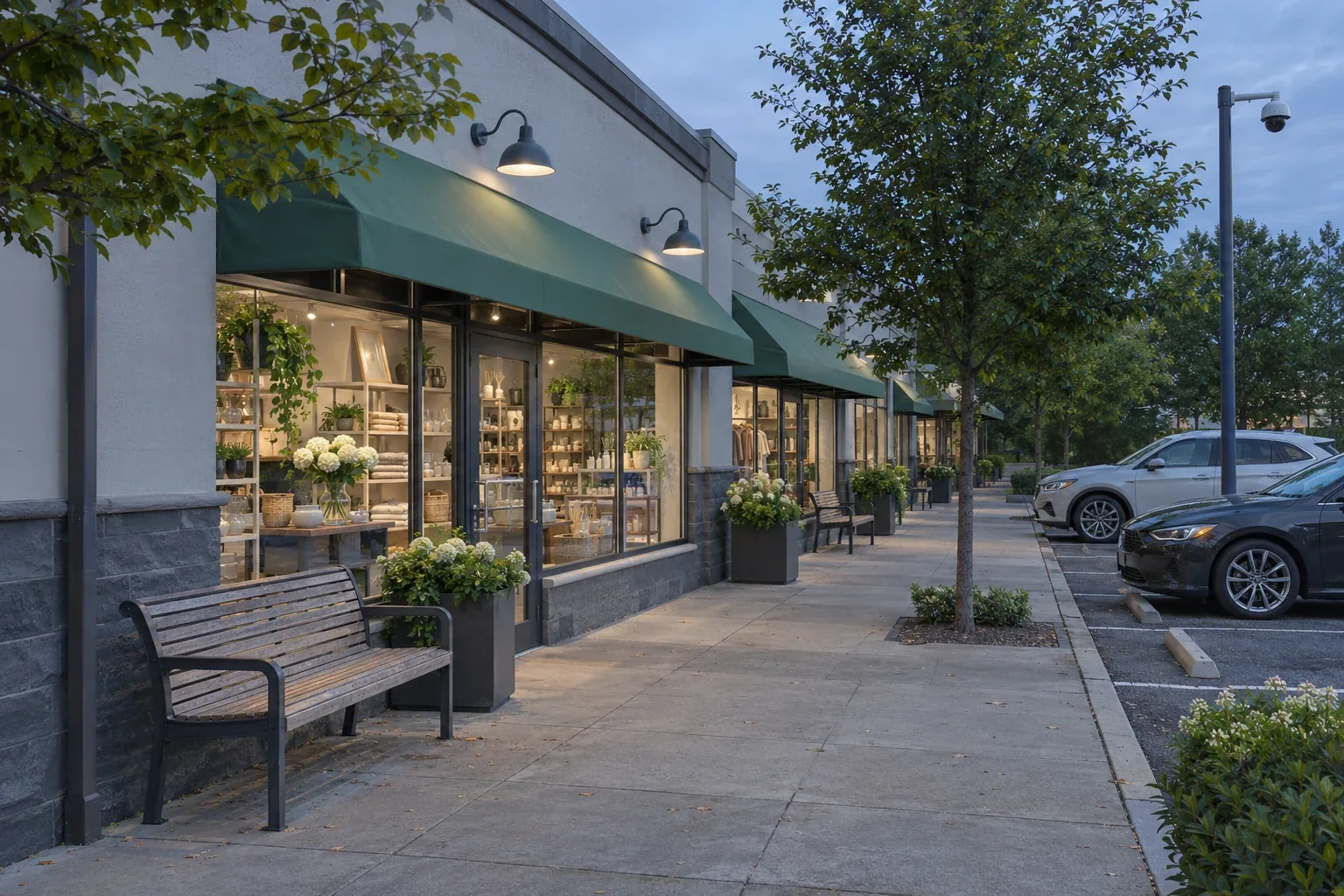
Shoppers on Burlingame Avenue and Broadway expect a pleasant experience, and merchants want problems kept out of the store without making customers uneasy. A courteous, visible officer manages both.
Officers can be posted at a single storefront, walk a center’s common areas and parking, or cover the hour around closing when staff count the drawer and head out. Once everyone has gone home, alarm response sends an officer if the store alarm trips. For multi-tenant centers, our shopping center guide explains a typical setup.
Services
01 / On-site
Officers who greet, check in and keep watch while your own staff get on with their day.
View details02 / Patrol
Marked cars checking your property at unpredictable times overnight.
View details03 / Short notice
Officers for a night, a week or a season, booked when you need them.
View detailsRetail mornings are mostly quiet: shutters go up, a delivery truck or two pulls into the alley and staff arrive in ones and twos. That is why it makes sense to weight officer hours toward the afternoon and evening, when Burlingame Avenue and Broadway fill with shoppers, diners and people simply passing through. An officer who starts mid-afternoon sees the busiest stretch of the day and stays on for the hour when registers are closed out.
Through the shift, the officer moves between the front door and the common areas, pausing at entrances when foot traffic peaks. Over a few weeks they learn which merchants close late, which employees walk to the garage and which visitors keep lingering near the entrances. Every loop goes into a timed log, so the manager can see exactly when each part of the property was checked.
When something goes wrong, the value of security often comes down to the record. If a merchant reports a theft or a confrontation, the officer writes it up with the time, the spot, a description of the people involved and photos that show what happened. That incident report reaches the manager by email, giving the store something concrete to pass along when it files a report.
Daily shift reports round out the picture for center management. Read together, they show which entrance draws trouble, which evenings run hot and whether a lighting problem in the lot keeps coming back. Owners can use that pattern to decide where to add hours, where to cut back and when a repair is worth making, rather than guessing from the occasional complaint.
Once the last shop locks up, attention shifts to the back of the building: service doors, loading areas, trash enclosures and the alleys behind storefronts. Mobile patrol covers this well. A marked car arrives at randomized times, and the officer walks the rear of each building, tries the doors and notes anything left open, damaged or unlit.
For centers with good cameras, live camera monitoring can watch the lot and loading areas through the night and send patrol when someone appears. A good pairing is a daytime officer for shoppers and staff, followed by patrol and cameras once the doors close, all set out in one written quote. Send your store and service-door hours before the next busy week, and the walkthrough prices door, common-area and closing coverage around them.
A retail officer in Burlingame generally runs $42 to $48 an hour, but the monthly total moves with the calendar. High-value boutiques sit at the top of the unarmed range, and can add an armed officer for the evening close. A store that closes after dark may want the officer to walk staff to their cars, which adds a little time to each shift.
A Burlingame boutique might book an officer on Saturdays and Sundays from 11 a.m. to 7 p.m., plus Friday evenings from 4 p.m. to 9 p.m. That’s 21 hours a week; at $48 an hour, $1,008 a week or about $4,370 a month. Between Thanksgiving and New Year’s, a shop can add weekday afternoons, then return to weekends in January. A shopping center can share one officer across the common areas and parking, which spreads the cost among tenants.
Yes. Several merchants or a center can share common-area coverage.
Yes. Officers can stay through closing and walk staff to their cars.
Yes, and drop back once the season ends.
The officer stays visible and offers a courteous greeting near the entrance, which sends a clear message without making a scene. Descriptions, times and photos then go into an incident report for the store manager, and the store’s own policy decides what happens next.
A single store with valuable stock and one entrance suits a door post. Several tenants sharing walkways and parking get more from a roaming officer on a timed loop, and the walkthrough shows which one fits your property.
Yes. Officers can check service doors during delivery windows and confirm they’re closed and locked after the truck pulls away, with each check noted in the log.
Industries
Resources